Audio tour of the front garden entrance by Art Hilker, tour guide and Master Gardener Volunteer.
Audio clip: Adobe Flash Player (version 9 or above) is required to play this audio clip. Download the latest version here. You also need to have JavaScript enabled in your browser.
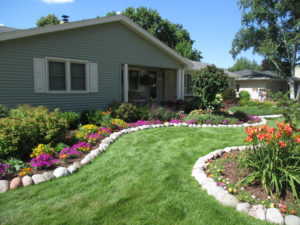
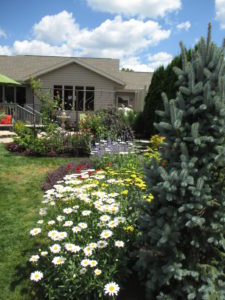
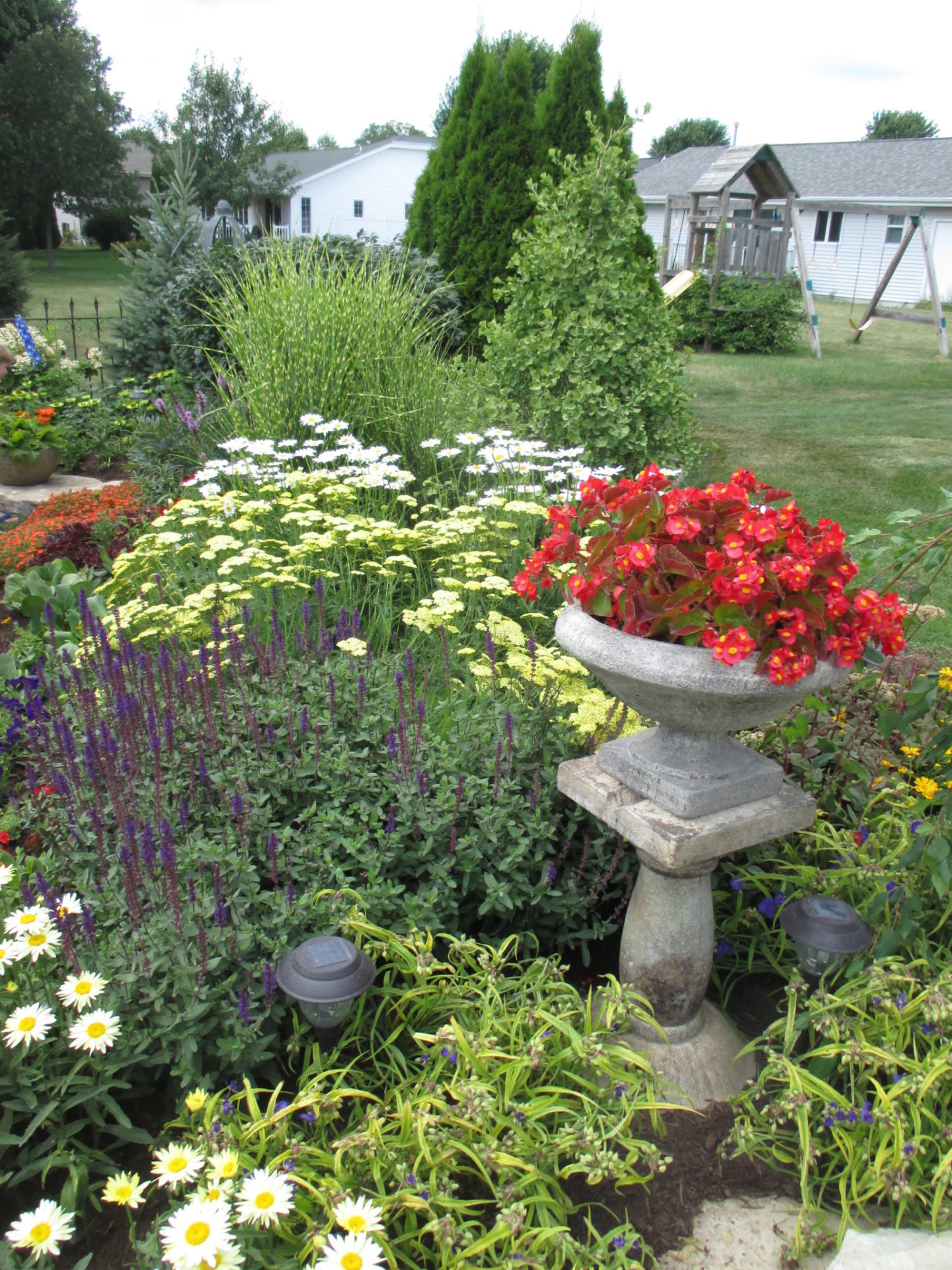
Thousands of daffodils blooming in April, alliums in May and annuals in summer in the color theme of the year, make the entrance area berms a beautiful introduction to Rotary Botanical Gardens.
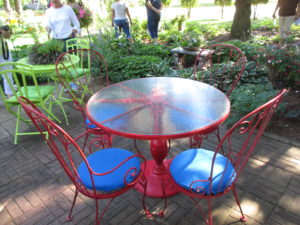
The Parker Education Center Entrance garden was constructed in 2003. It includes a collection of rare woody plants which are primarily conifers. Plant material is nestled among boulders around circular brick patio planters that are connected with curving brick paths. These choice evergreens form the backbone of this garden through all four seasons.
Colorful floral displays are modified not only once, but three times each year in this high traffic area.
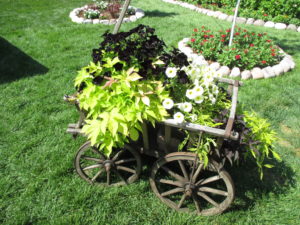
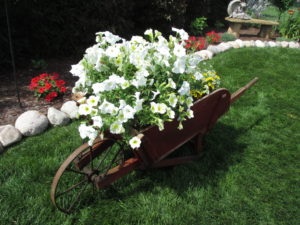
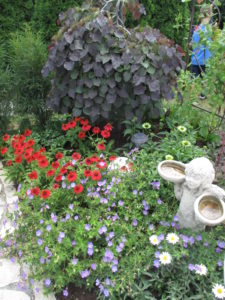
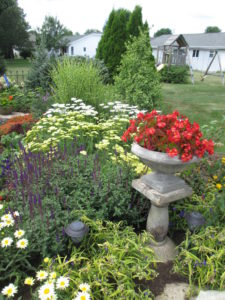
Hundreds of tulips in the patio planters give way to summer annuals that are then replaced with mums and asters in late summer, all in the color theme of the year. The areas surrounding the brick planters, paths, rocks and woody plants are filled with hundreds of summer plantings such as cannas, dahlias, petunias, basil, celosia and amaranths.
Culminating the year are holiday displays and thousands of lights as an entry point for the Holiday Lights Show in December.
The primary intent of this garden is to give a taste of what the rest of the gardens contain.
The entrance garden area is also home to the sculpture Dialogue: World Peace Through Friendship by O. V. Schaffer, Retired Art Professor at Beloit College. Dialogue was commissioned to reflect a concept of peace and friendship among all people of the world.
Another Schaffer sculpture, Biota, is located at the southeast corner of the gardens. Biota’s three forms symbolize the community, the plant life, and the volunteers of the gardens.
Rotary Botanical Gardens is a gift to the community from the community. The gardens have been built almost entirely with private donations with very little public money involved.
The gardens plant population includes over 1000 varieties of woody plants, 3,000 varieties of perennials, over 400,000 spring blooming bulbs and features over 100,000 annuals planted each year.
Rotary Botanical Gardens 400+ volunteers log approximately 20,000 volunteer hours each year enabling the Gardens to carry on its mission “To provide horticultural education and appreciation for everyone.”