

Thursday, 23 of May of 2013

Virtual Tour: Italian and French Formal Gardens Overview

Audio tour of the Italian and French Formal Gardens of Rotary Botanical Gardens by volunteer tour guide, Chuck Smith.

Audio clip: Adobe Flash Player (version 9 or above) is required to play this audio clip. Download the latest version here. You also need to have JavaScript enabled in your browser.

People have had gardens since the time long past when they began to settle in groups and ceased being nomadic hunter-gatherers. These gardens were the beginnings of present-day agriculture and were needed for survival. 

 Formal gardens for pleasure and enjoyment date from the 1500’s when people of wealth and power had the means to create them. 

Any formal garden has three features in common: A geometrical layout, a water feature, and statuary. Our Formal Gardens are laid out along an axis from the Cottage Garden to the fountain in the pond. 

Our Italian Garden is the most formal of the gardens here at Rotary Botanical Gardens.  The  partiered beds are  hedged in boxwood and each end is a mirror image of the opposite. One end is planted with perennials and the other with annuals. The four statues represent the four seasons and the Koi pond serves as a water feature.  Koi originated in Japan; the name derives from a Japanese expression for “Swimming Flowers”. They can live quite a long time, as much as 250 years. 

Our French Garden, named because of the many roses grown here and the association of  roses with things French and with perfume. (In 1867,William H. Tallman, a local pharmacist, entered some of his perfumes in an International Exposition in Paris and was awarded a medal!) The circular beds, which give the garden it’s geometric shape,  contain specimens of hardy shrub roses that thrive with minimal care.

There are also some examples of the hybrid tea roses and behind the pergola are examples of the floribunda-type rose. This area forms a perfect setting for a formal wedding with the bride and her attendants standing under the pergola with the fountain in the back-ground and guests seated on the lawn. 

In addition, there is an Herb Garden placed along the arbor vitae hedge to the south of the Italian Garden. This garden is tended by the Janesville Herb Society and has separate beds for aromatic, medicinal and culinary herbs.

Share

The Wisconsin Gardener- Edible Ornamentals with Mark Dwyer, Director of Horticulture

Watch the full episode. See more The Wisconsin Gardener.

Share

Discover Janesville with Yuri Rashkin – Mark Dwyer, Director of Horticulture

httpv://www.youtube.com/watch?v=nbzbbmASKds&feature=autofb

Share

Virtual Tour: The Front Entrance Garden

 Audio tour of the front garden entrance by Art Hilker, tour guide and Master Gardener Volunteer.

Audio clip: Adobe Flash Player (version 9 or above) is required to play this audio clip. Download the latest version here. You also need to have JavaScript enabled in your browser.

Thousands of daffodils blooming in April, alliums in May and annuals in summer in the color theme of the year, make the entrance area berms a beautiful introduction to Rotary Botanical Gardens. 

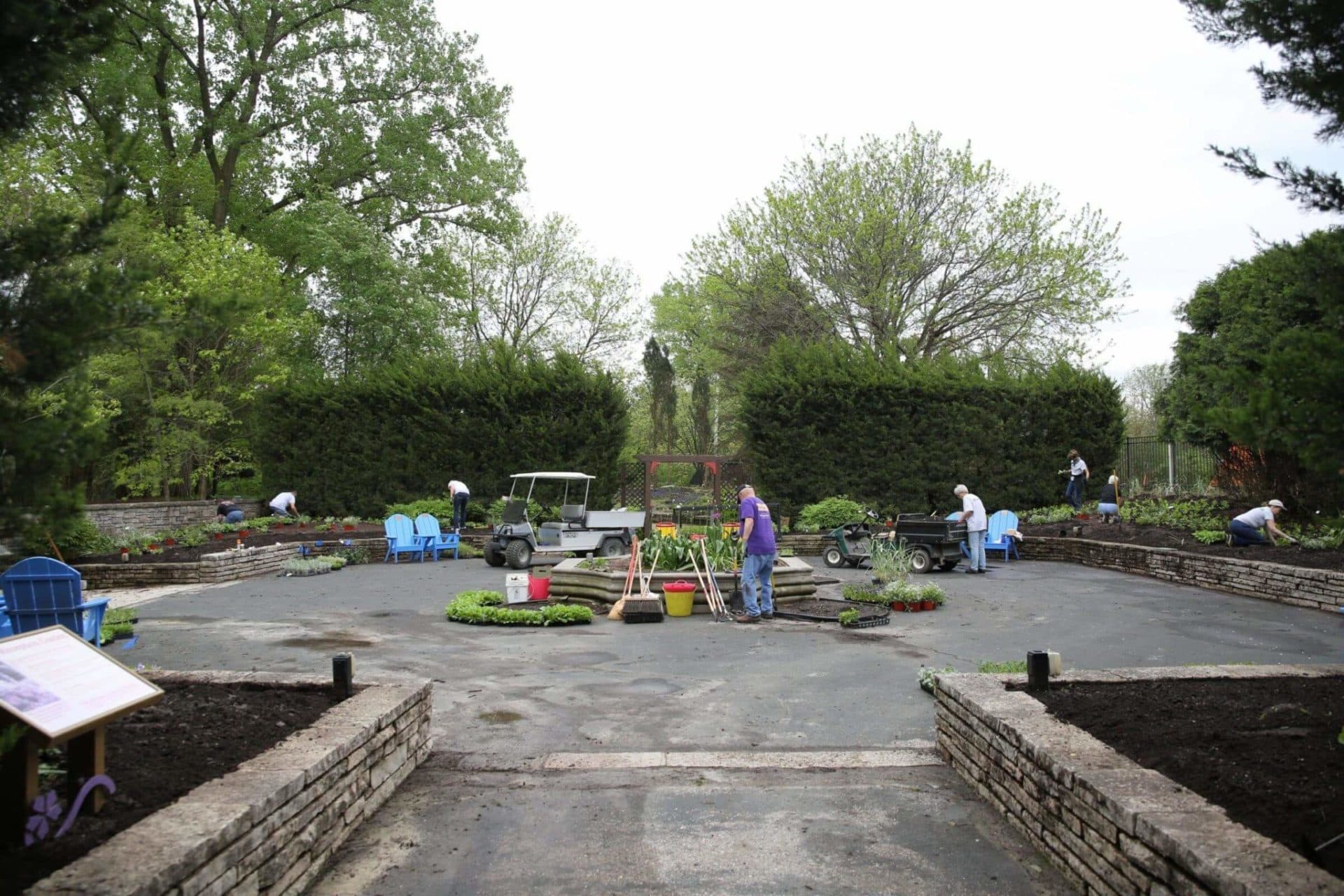
The Parker Education Center Entrance garden was constructed in 2003. It includes a collection of rare woody plants which are primarily conifers.  Plant material is nestled among boulders around circular brick patio planters that are connected with curving brick paths.  These choice evergreens form the backbone of this garden through all four seasons.  

Colorful floral displays are modified not only once, but three times each year in this high traffic area.  

Hundreds of tulips in the patio planters give way to summer annuals that are then replaced with mums and asters in late summer, all in the color theme of the year.  The areas surrounding the brick planters, paths, rocks and woody plants are filled with hundreds of summer plantings such as cannas, dahlias, petunias, basil, celosia and amaranths.  

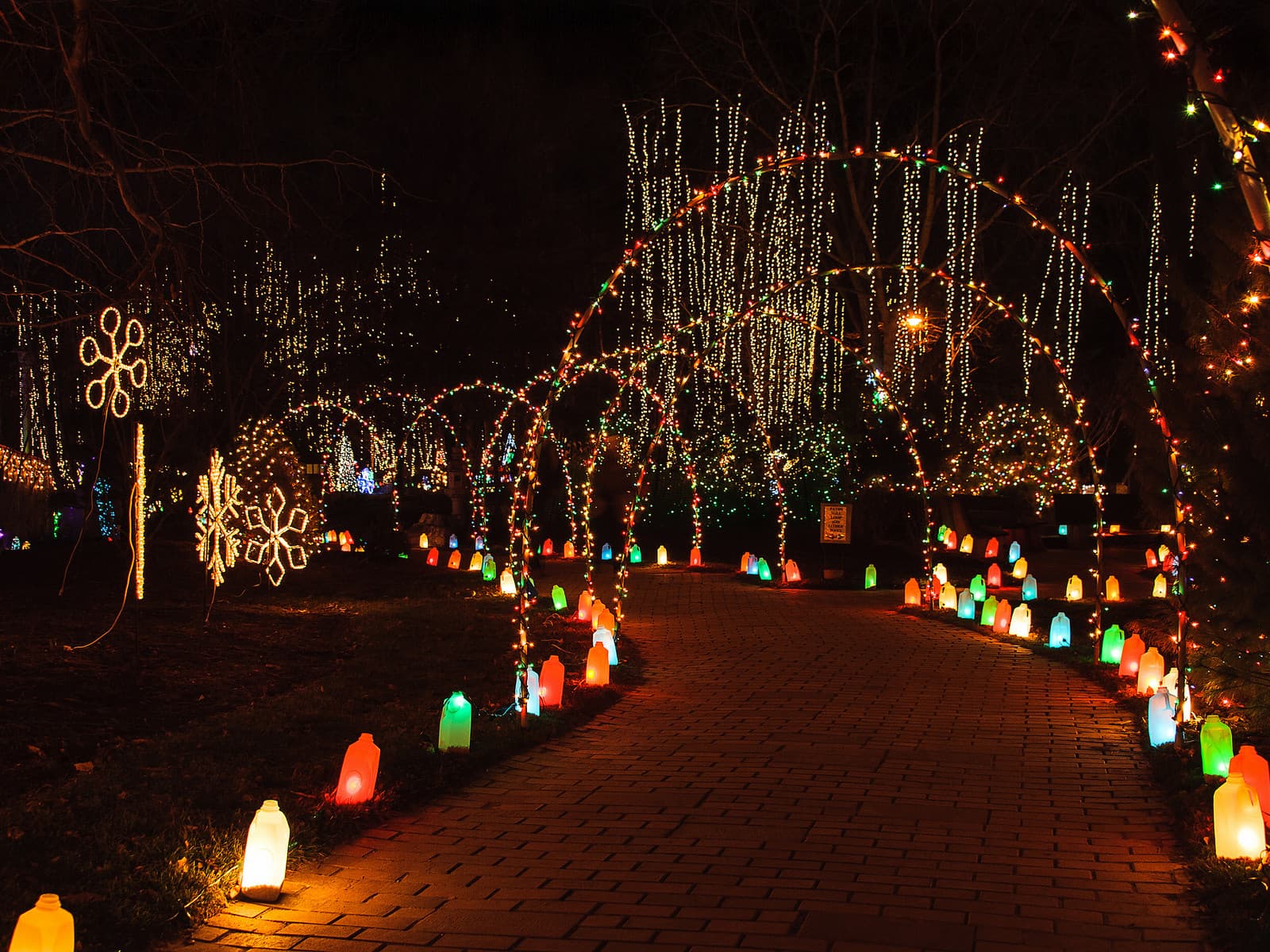
Culminating the year are holiday displays and thousands of lights as an entry point for the Holiday Lights Show in December. 

The primary intent of this garden is to give a taste of what the rest of the gardens contain.  

The entrance garden area is also home to the sculpture Dialogue:  World Peace Through Friendship by O. V. Schaffer, Retired Art Professor at Beloit College.  Dialogue was commissioned to reflect a concept of peace and friendship among all people of the world. 

Another Schaffer sculpture, Biota, is located at the southeast corner of the gardens.  Biota’s three forms symbolize the community, the plant life, and the volunteers of the gardens. 

Rotary Botanical Gardens is a gift to the community from the community.  The gardens have been built almost entirely with private donations with very little public money involved. 

The gardens plant population includes over 1000 varieties of woody plants, 3,000 varieties of perennials, over 400,000 spring blooming bulbs and features over 100,000 annuals planted each year. 

Rotary Botanical Gardens 400+ volunteers log approximately 20,000 volunteer hours each year enabling the Gardens to carry on its mission   “To provide horticultural education and appreciation for everyone.” 

Share

Virtual Tour: All American Awards and Fleuroselect Collections

Audio tour of the All American Awards and Fleuroselect collections by Mark Dwyer, Director of Horticulture.

Audio clip: Adobe Flash Player (version 9 or above) is required to play this audio clip. Download the latest version here. You also need to have JavaScript enabled in your browser.

In 2010 RBG will again feature All American Selections (AAS) award winning annuals and Fleuorselect award winning annuals. AAS has been around since 1933 and each year recommends both annuals and vegetables for consumers to purchase and grow in their yards.  There are over 175 displays gardens in North America featuring AAS.  In 2004 RBG won the national award for our AAS collection and in 2006 featured an historical display of many of the past AAS winners from 1933 to 2006. 

Fleuroselect is the European counterpart to AAS…  Started in the 1970’s Fleuroselect also promotes award winning seasonal plants.  RBG is only one of six botanical gardens in the United States to feature this collection.

We have over 100,000 seasonal plants in the garden representing nearly 600 varieties.

Share