
Audio tour of the founding of Rotary Botanical Gardens by volunteer tour guide, Chuck S.
Audio clip: Adobe Flash Player (version 9 or above) is required to play this audio clip. Download the latest version here. You also need to have JavaScript enabled in your browser.
As you visit Rotary Botanical Gardens, it is hard to visualize what existed here 21 years ago, before Dr. Robert Yahr approached the City of Janesville with his plan for the 15 acres that now make up Rotary Botanical Gardens.
Actually, the forces that have formed the present area acted over 10,000 years ago, at the end of the last Ice Age, known as the Wisconsin. As the climate changed and the mile thick sheet of ice that made up this glacier began to recede, it left behind masses of sand and gravel, known as a terminal moraine. This material was used for construction and for the manufacture of pre-cast concrete products. This activity still flourishes in the area today. One of the early producers of material from this site was the Wilcox Sand and Gravel Co., who dredged sand from the area that is the 20 acre spring-fed pond that bounds the Gardens on three sides. The two-story brick structure adjoining the Parker Center is a remnant of the Wilcox operation.
During the 1930’s the area was the home of a cattle trader and sales barn. Later, the city laid claim to the property and used it for several years as a storage facility and a BMX track graced the area where the Sunken Garden is.
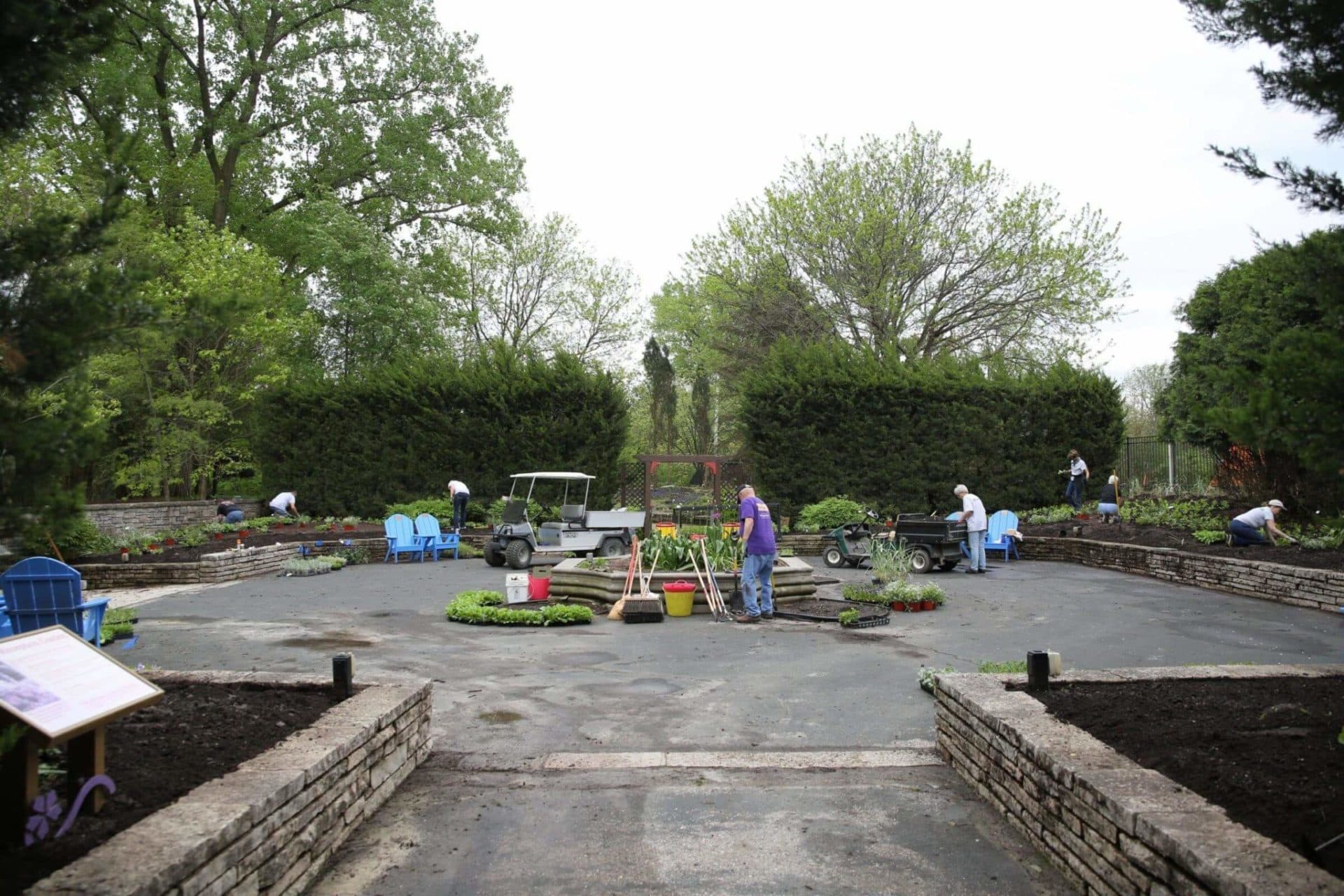
When Dr. Yahr and his fellow Rotarians began to remove the many years accumulation of debris from the site, they soon realized that they would need additional help if they were to fulfill the dream of Rotary Botanical Gardens. Incidentally, the name for the gardens comes from the fact that Dr. Yahr is an active member of the local Rotary Club and that his fellow members were among the first to volunteer; Rotary International has no connection whatsoever with the Rotary Botanical Gardens. The people of Janesville and many area businesses responded with labor, money and materials. The Gardens as they exist today are a tribute to the dream of Dr. Yahr and the dedication of over 300 volunteers who spend many thousands of hours each year to keep the dream alive and growing. The Gardens are supported by memberships, donations, admission fees and rental of the facilities for weddings and meetings. The Gardens receive no tax support. The result is a world-class Botanical Garden with over 4,000 trees, shrubs, plants and flowers. The Gardens have been recognized by such group as the All-American Selection, Fleuro- select (a European garden group), The Hosta Society, the Iris Society, and the Peony Society. In addition, commercial plant and seed companies ask us to test-plant new varieties before they are introduced to the public.
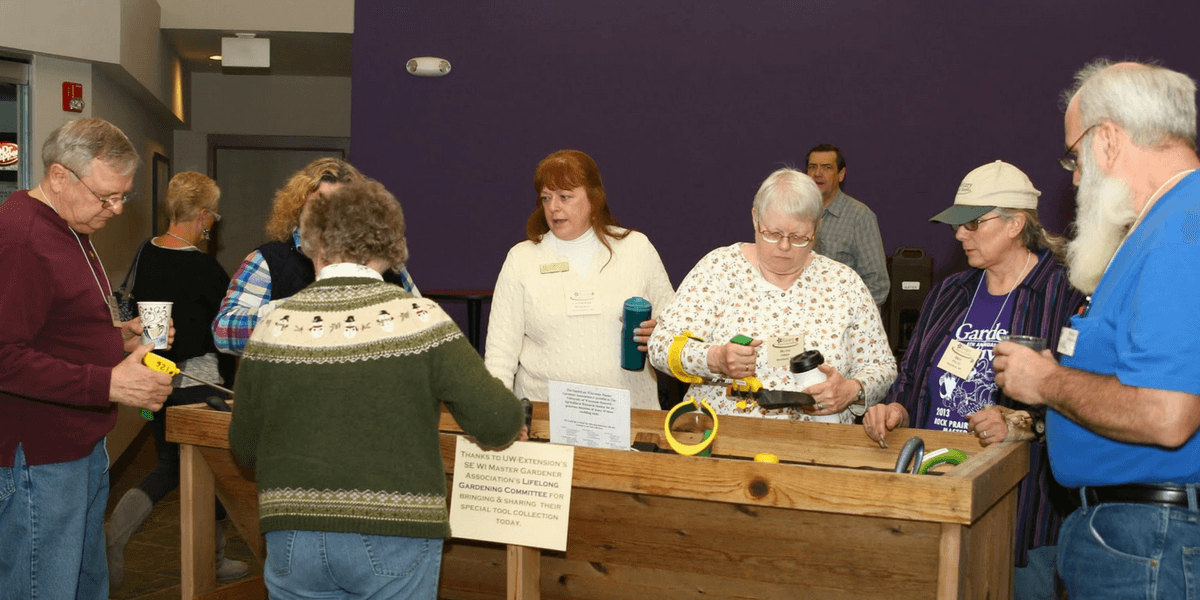
Another of our missions is to educate students and adults through curriculum co-operation with the public schools and also by providing the Master Gardener program as well as hosting classes and seminars on subjects relative to gardening.